
What Is a Junk Journal and How Is It Different From a Traditional Diary?
What Is a Junk Journal and How Is It Different From a Traditional Diary?
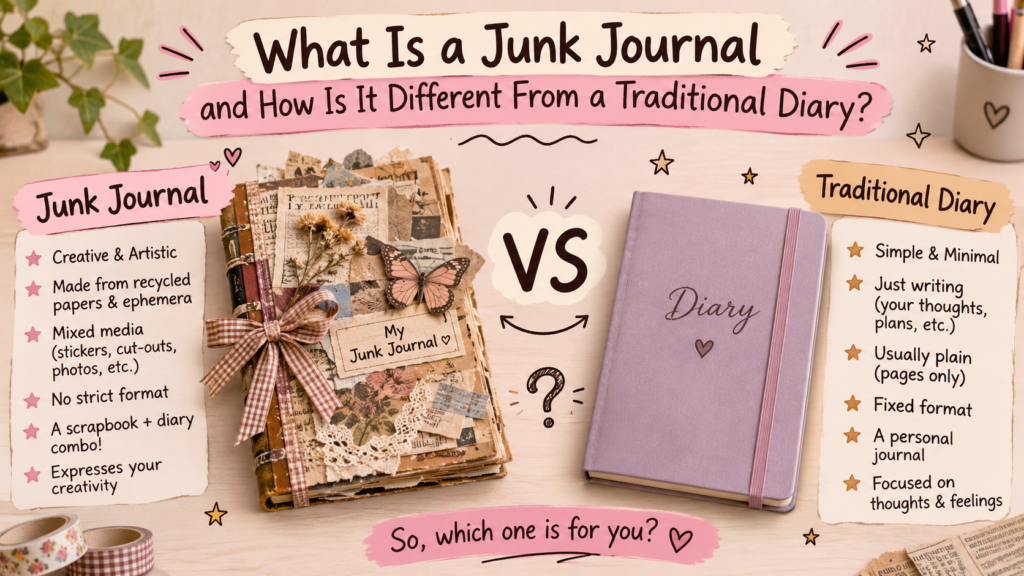
Junk journaling is a creative hobby that combines writing, collage, paper crafting, and memory preservation. Unlike a traditional diary, which primarily records thoughts and daily experiences through text, a junk journal uses materials such as magazine pages, tickets, envelopes, fabric scraps, photographs, and packaging. The result is a book that reflects personal experiences through textures, images, and written notes. This approach attracts adults who enjoy crafts but do not necessarily want to write long diary entries.
Creative journaling also represents a different approach to leisure than digital entertainment. Someone exploring online activities may click here to view a chance-based slot game, although gambling involves financial risks and depends on unpredictable outcomes. Junk journaling offers an alternative where participants control the creative process, select materials, and develop projects according to personal preferences. Understanding its structure helps explain why this hobby appeals to people interested in self-expression and handmade objects.
What Exactly Is a Junk Journal?
A junk journal is a handmade or modified notebook containing pages assembled from paper, recycled materials, and decorative elements.
The term refers to the practice of incorporating materials that might otherwise be discarded. These can include receipts, newspaper clippings, envelopes, labels, and packaging.
Pages may contain writing, photographs, drawings, pockets, and attached objects.
Unlike conventional notebooks, junk journals do not require uniform page sizes or consistent layouts.
Some creators focus on documenting experiences, while others build books around historical themes, colors, or imaginary stories.
How Junk Journals Differ From Traditional Diaries
The main difference concerns how information is recorded.
Traditional diaries generally use chronological written entries to document events, emotions, and observations.
Junk journals rely on a combination of visual materials, text, and physical objects.
A diary entry might describe a trip through several paragraphs, while a junk journal page could contain transportation tickets, photographs, handwritten notes, and collected paper.
Another difference is structure. Diaries usually follow a sequence of dates, whereas junk journals may organize pages according to themes or creative ideas.
Both formats can support reflection, but junk journaling places greater emphasis on material experimentation.
Why Recycled Materials Are Central to the Hobby
Reusing paper and objects is one of the defining characteristics of junk journaling.
Old envelopes, packaging, newspapers, and unwanted book pages can become components of a journal.
These materials introduce differences in texture, color, and surface appearance.
Recycling also allows beginners to experiment without purchasing extensive craft supplies.
However, not every reused material is suitable for long-term preservation.
Some papers contain acids that contribute to discoloration or deterioration.
People creating journals intended to last for decades may prefer archival-quality adhesives and paper for important photographs or documents.
Common Materials and Tools
Junk journaling requires relatively little equipment.
Beginners can use scissors, glue, paper, thread, and an existing notebook.
Additional materials may include stamps, fabric, ribbons, dried flowers, and decorative paper.
Some creators assemble books from individual sheets using stitching or binding techniques.
Others modify notebooks that already contain pages.
Material selection should reflect the intended purpose. A journal containing thick objects may require reinforced binding or additional space between pages.
Starting with available household materials helps beginners understand the process before purchasing specialized equipment.
The Role of Collage and Visual Storytelling
Collage is a central technique in junk journaling.
Participants combine images, text fragments, and objects to communicate ideas through composition.
A page about autumn might include leaves, photographs, paper with seasonal colors, and written observations.
The arrangement of elements influences how the page is interpreted.
Unlike conventional writing, visual storytelling does not require information to follow a chronological sequence.
Creators can communicate emotions, memories, or fictional narratives through the relationship between materials.
This flexibility makes the hobby suitable for people interested in creative expression without formal artistic training.
Junk Journaling as a Memory-Keeping Activity
Junk journals can preserve experiences through objects associated with particular events.
Travel tickets, restaurant receipts, postcards, and photographs provide physical connections to memories.
Instead of storing these items separately, creators incorporate them into pages with notes explaining their significance.
This approach can make ordinary experiences easier to revisit.
However, preserving memories does not require documenting every event.
Selecting meaningful objects helps maintain a focused journal and prevents pages from becoming overloaded.
The value comes from personal associations rather than the financial worth of collected materials.
How Junk Journaling Compares With Scrapbooking
Junk journaling and scrapbooking share several techniques, including collage, photography, and decorative composition.
However, scrapbooking often focuses on documenting photographs and events through arranged pages.
Junk journaling typically places greater emphasis on mixed materials, irregular structures, and experimentation.
Scrapbooks may follow consistent layouts, while junk journals frequently incorporate pockets, folded pages, and objects extending beyond page boundaries.
The distinction is not absolute. Many creators combine techniques from both activities.
Choosing between them depends on whether the primary goal is organizing memories or experimenting with paper-based art.
Why Adults Find Junk Journaling Relaxing
Junk journaling involves repetitive manual actions such as cutting, arranging, folding, and attaching materials.
These tasks encourage attention to immediate decisions rather than professional responsibilities.
The activity also provides opportunities to work without strict rules or performance expectations.
Some people find satisfaction in completing pages, while others enjoy collecting and organizing materials.
However, complicated designs and excessive perfectionism can introduce frustration.
Maintaining flexibility allows the hobby to remain enjoyable regardless of artistic experience.
How to Start Your First Junk Journal
Beginners should start with a small notebook or several folded sheets of paper.
Choose a theme, such as travel memories, everyday observations, or seasonal changes.
Collect materials already available at home and arrange them before attaching anything permanently.
Experiment with layering paper, adding pockets, and combining photographs with short notes.
Avoid purchasing large quantities of supplies before understanding which techniques are enjoyable.
Completing several pages provides enough experience to determine whether more advanced binding or decoration methods are worth exploring.
Why Junk Journaling Appeals to Creative Adults
Junk journaling combines personal documentation with paper crafting, collage, and visual storytelling.
Its appeal comes from transforming ordinary materials into objects that preserve memories or express ideas.
Unlike traditional diaries, junk journals do not depend primarily on written entries or chronological organization.
Participants can experiment with formats, textures, and themes according to their interests.
For adults seeking a hobby that requires limited equipment and encourages creativity, junk journaling offers an accessible way to turn discarded paper and everyday experiences into meaningful handmade books.